Spoilert, Your Ultimate Grocery Tracker
The Big Idea
Year
/
2025
Client
/
Startup
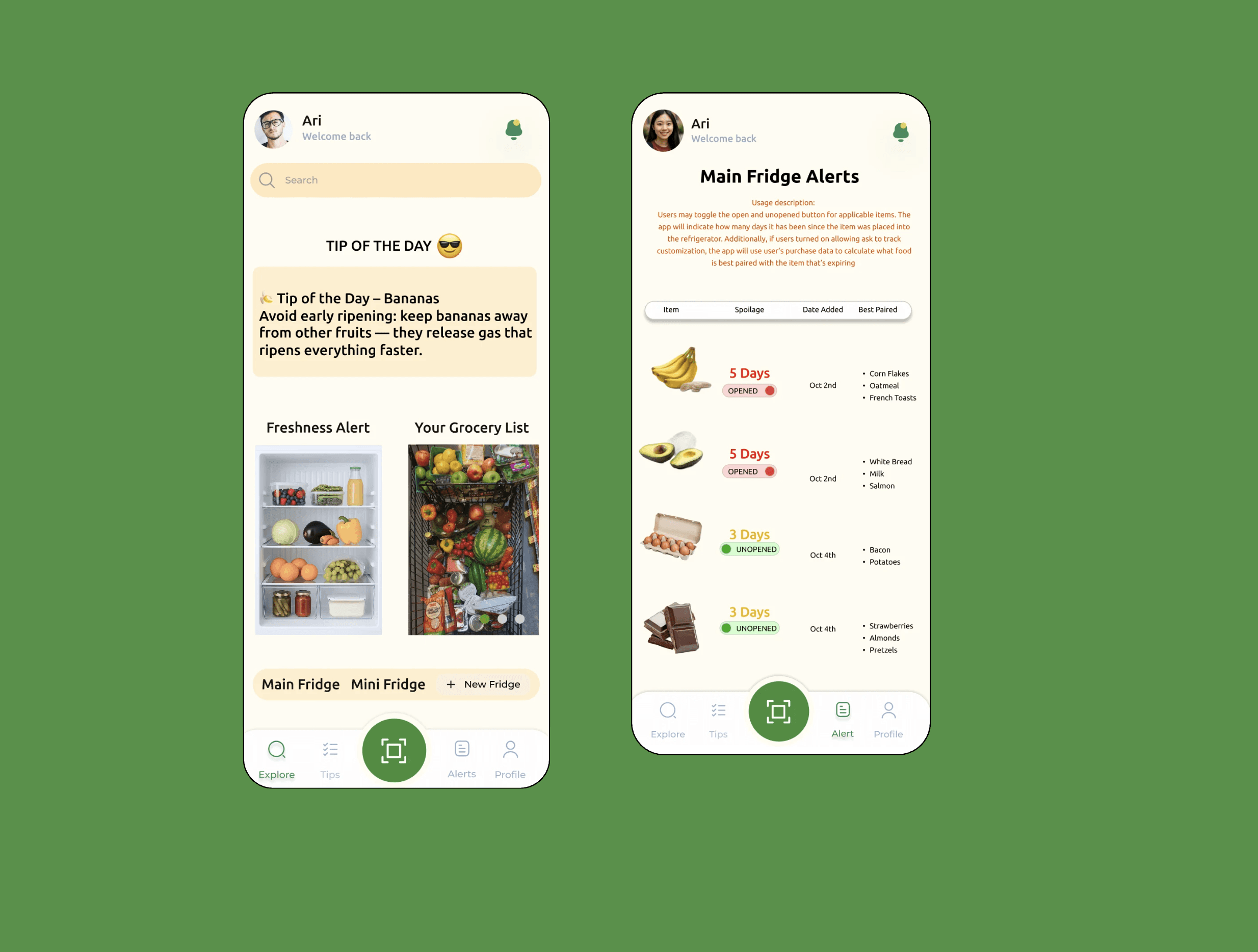
Food waste continues to be a growing issue in households, often caused by forgotten expiry dates, over-purchasing, and poor shared organization. Spoilert was designed to help users track food freshness, reduce waste, and simplify grocery management in shared households.
Food waste continues to be a growing issue in households, often caused by forgotten expiry dates, over-purchasing, and poor shared organization. Spoilert was designed to help users track food freshness, reduce waste, and simplify grocery management in shared households.
Problem
We found that food waste is less about awareness and more about daily friction. Users frequently forget expiry dates, overbuy items in shared households, and lose track of what others have already purchased. Existing tools often require too much manual input or feel too cluttered to maintain consistently, especially in fast-paced student environments.
We found that food waste is less about awareness and more about daily friction. Users frequently forget expiry dates, overbuy items in shared households, and lose track of what others have already purchased. Existing tools often require too much manual input or feel too cluttered to maintain consistently, especially in fast-paced student environments.
Solution
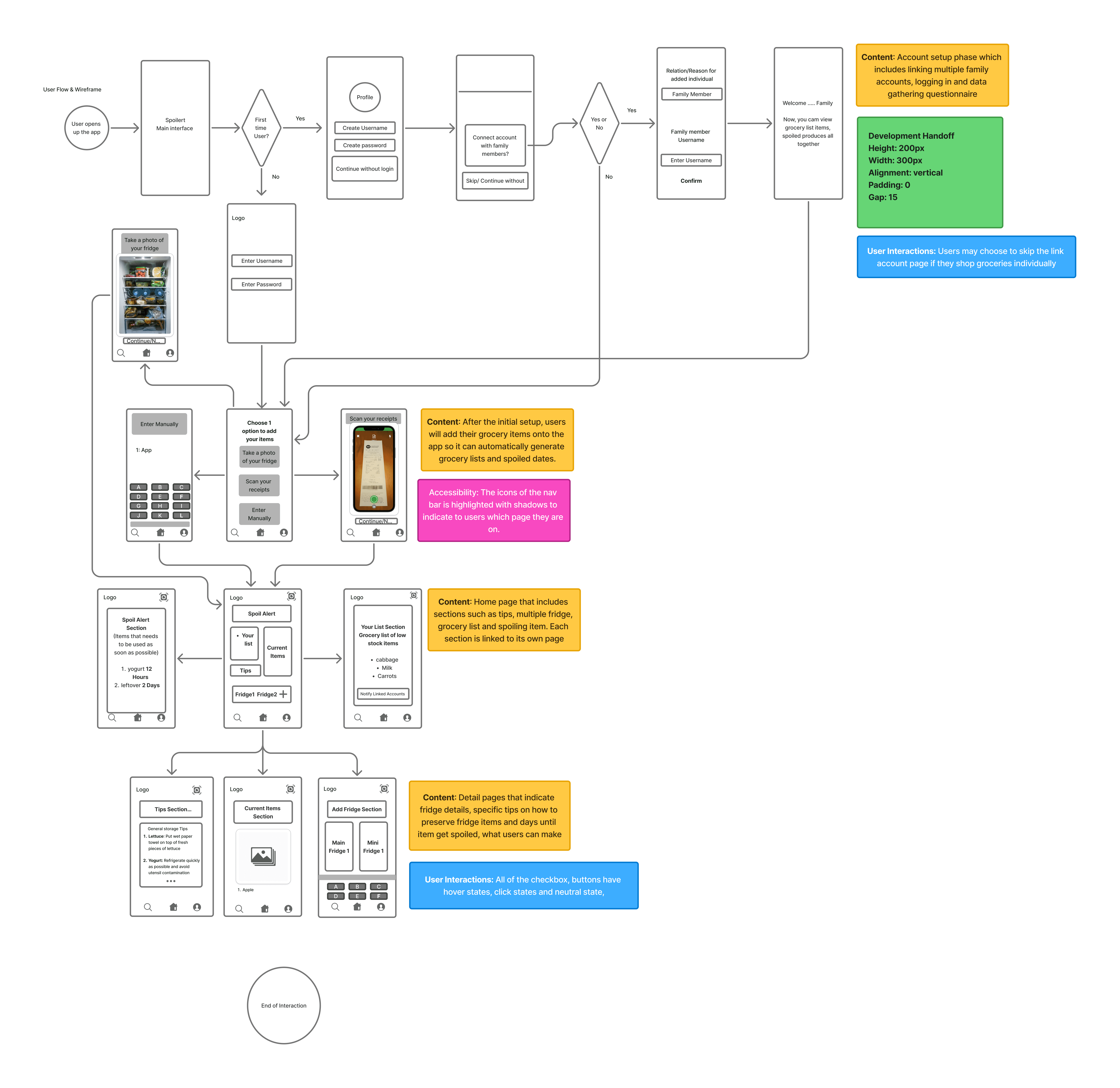
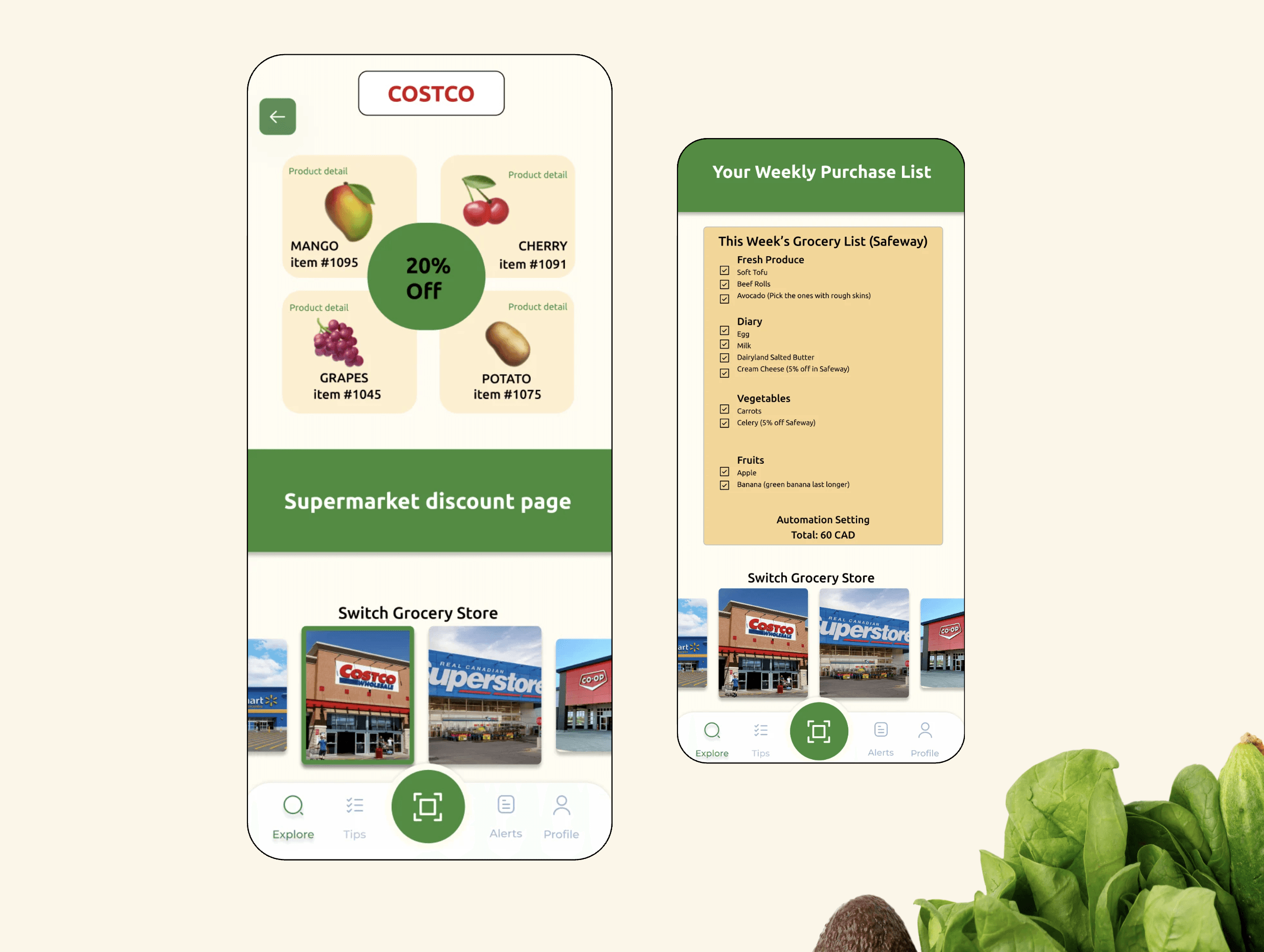
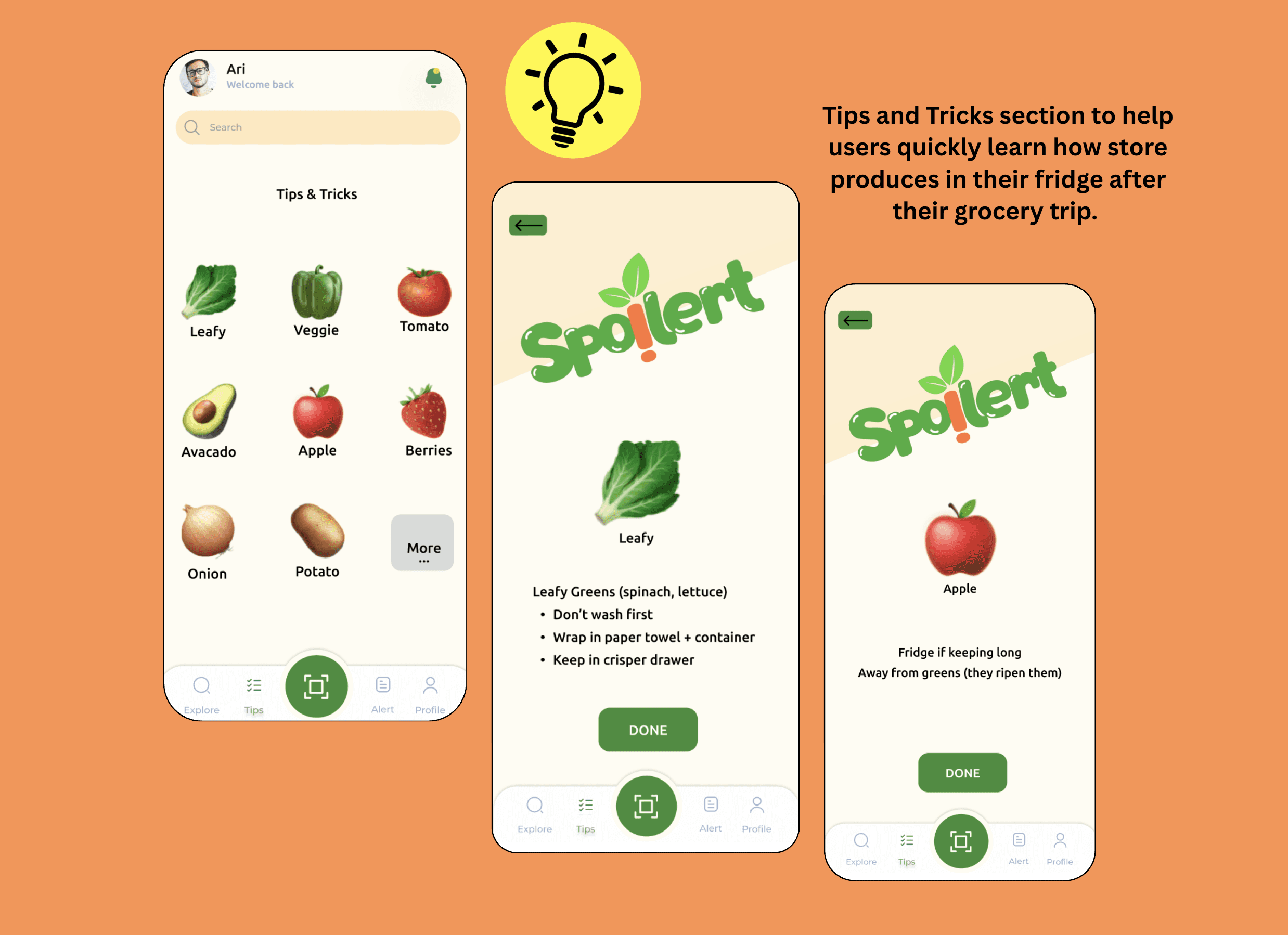
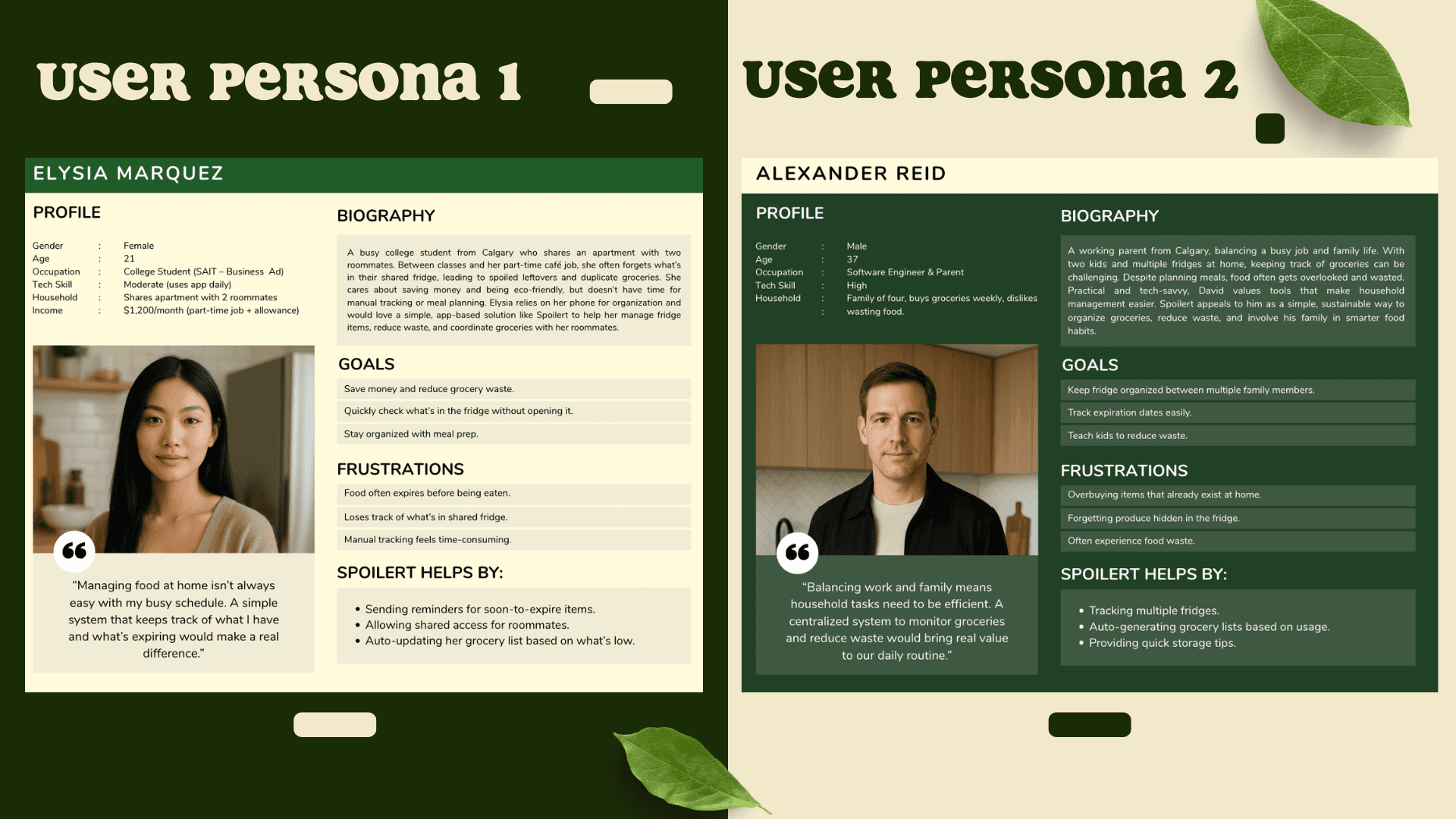
We designed Spoilert around automated clarity rather than manual tracking. Items are logged with purchase dates and automatically organized based on freshness, with soon-to-expire products surfaced at the top of the interface for immediate visibility. Shared grocery lists are synced to reduce duplicate purchases, while storage tips are simplified into quick, visual guidance instead of long instructional text. This creates a system that supports decision-making in real time without adding extra steps.
We designed Spoilert around automated clarity rather than manual tracking. Items are logged with purchase dates and automatically organized based on freshness, with soon-to-expire products surfaced at the top of the interface for immediate visibility. Shared grocery lists are synced to reduce duplicate purchases, while storage tips are simplified into quick, visual guidance instead of long instructional text. This creates a system that supports decision-making in real time without adding extra steps.
Decisions And Results
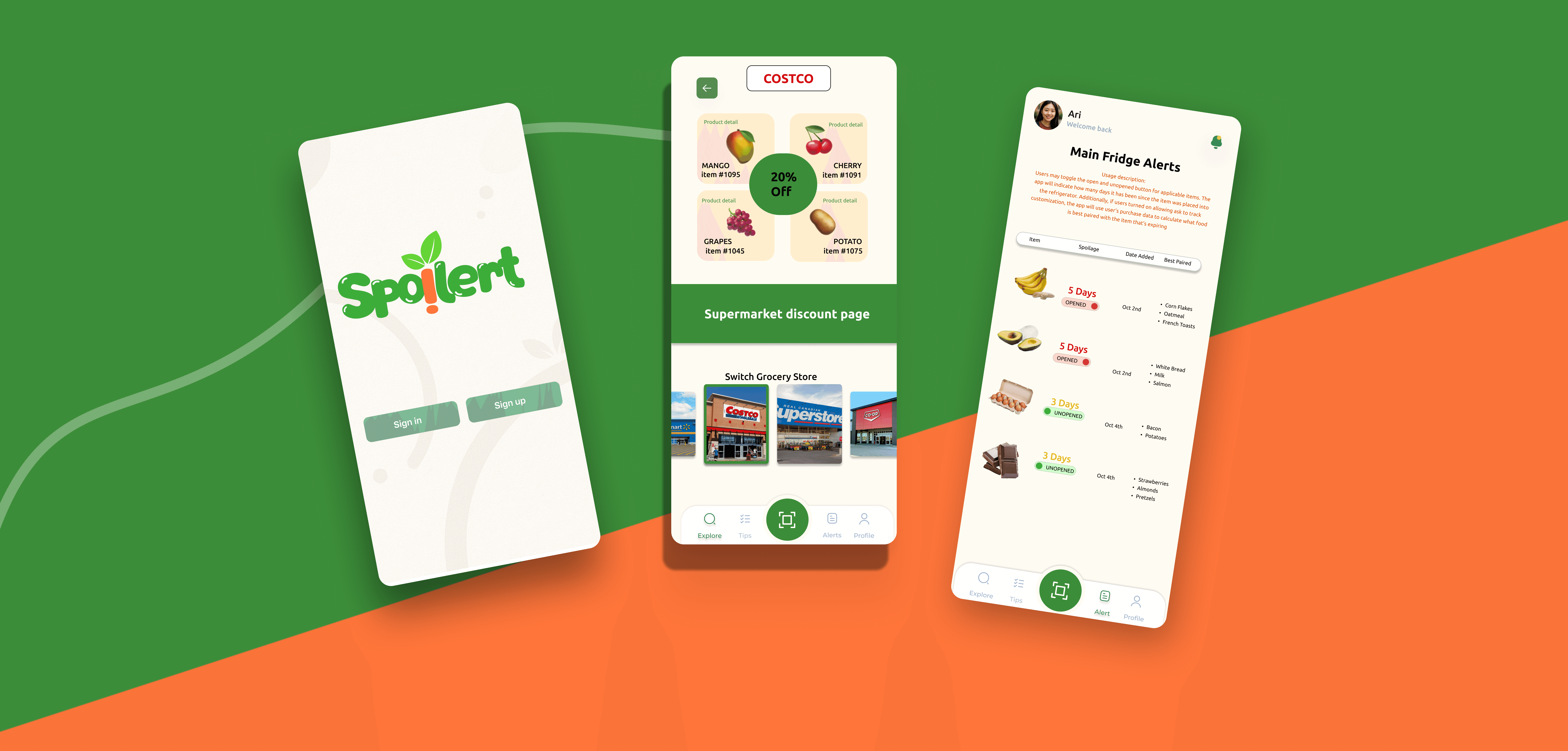
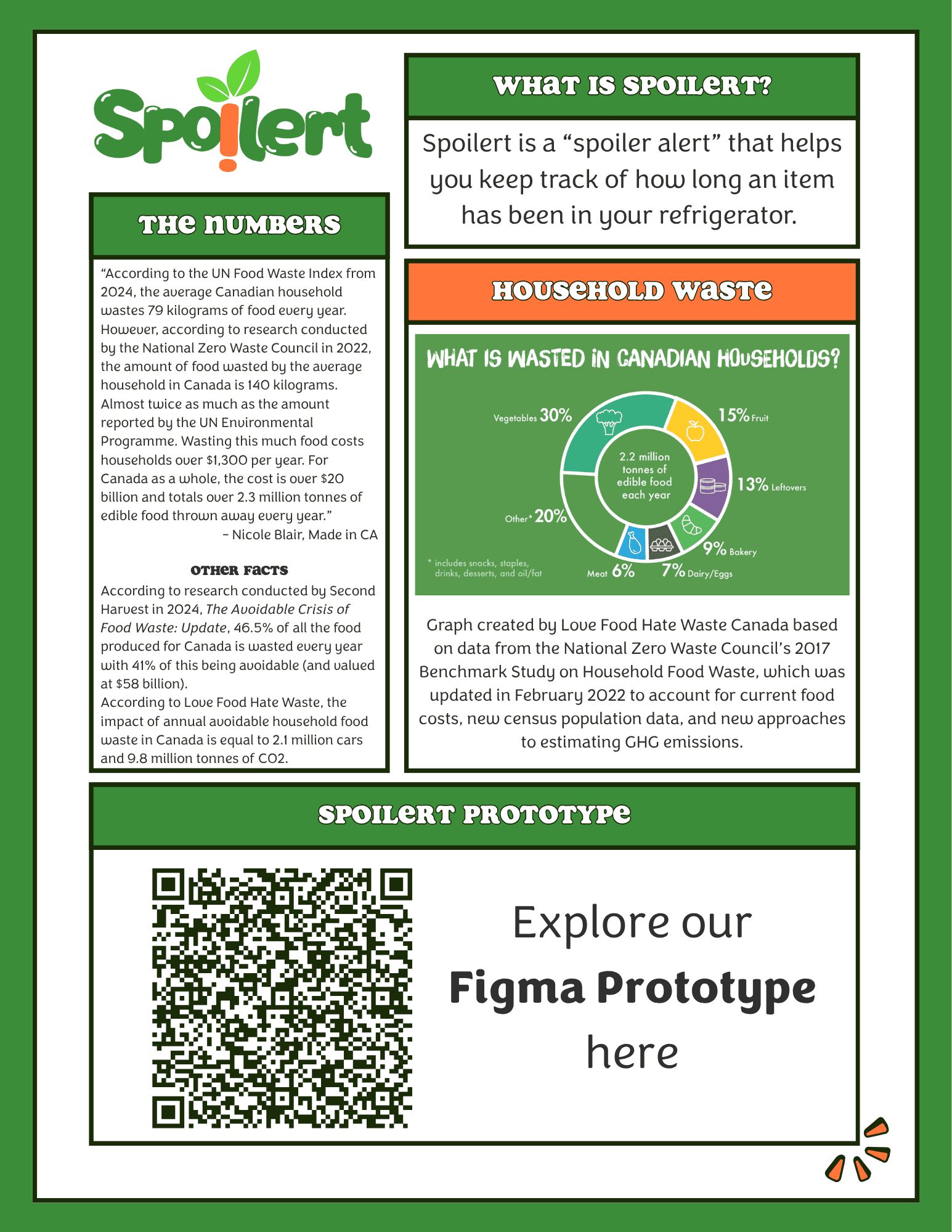
We prioritized visibility and speed by restructuring the interface around freshness rather than static categories. Expiring items are visually elevated using clear hierarchy and color cues, allowing users to scan urgency instantly instead of searching manually. We also simplified all storage education into short, scannable formats after testing showed that detailed instructions were ignored during real shopping scenarios. To reduce cognitive load, we narrowed the MVP to only core actions: logging items, checking freshness, and managing shared grocery lists. Everything else was intentionally deprioritized to keep the experience focused and easy to maintain. Usability testing validated these decisions. Users completed core tasks with significantly less hesitation, and 4 out of 5 participants successfully navigated the system without guidance after iteration, showing improved clarity and flow throughout the experience
We prioritized visibility and speed by restructuring the interface around freshness rather than static categories. Expiring items are visually elevated using clear hierarchy and color cues, allowing users to scan urgency instantly instead of searching manually. We also simplified all storage education into short, scannable formats after testing showed that detailed instructions were ignored during real shopping scenarios. To reduce cognitive load, we narrowed the MVP to only core actions: logging items, checking freshness, and managing shared grocery lists. Everything else was intentionally deprioritized to keep the experience focused and easy to maintain. Usability testing validated these decisions. Users completed core tasks with significantly less hesitation, and 4 out of 5 participants successfully navigated the system without guidance after iteration, showing improved clarity and flow throughout the experience